
How 24/7 Answering Helps Property Managers and Apartment Communities (Copy)
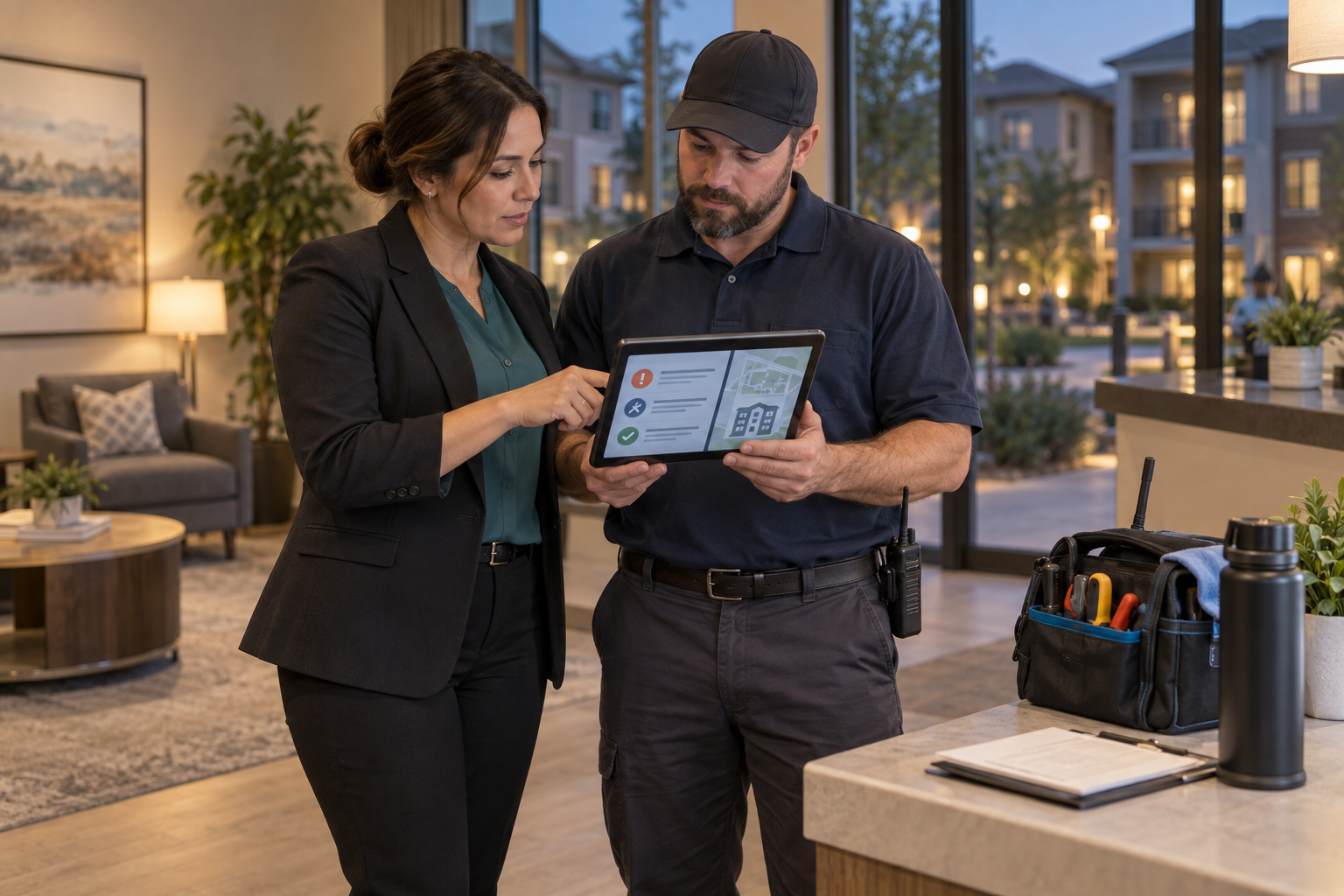
Managing an apartment community or rental portfolio requires constant communication with residents, prospective tenants, vendors, maintenance personnel, and property owners.
Those calls do not stop when the leasing office closes. A resident may discover a maintenance problem late at night, while a prospective renter may call during the weekend after seeing an available property online.
A 24/7 answering service helps property managers remain accessible without requiring office employees or maintenance personnel to personally answer every incoming call.
Handle Resident Calls After the Office Closes
Residents want to know that their request has been received, even when it cannot be resolved immediately.
A trained live operator can answer using your approved property greeting, collect the appropriate information, and explain the next step authorized by your management team.
Depending on your instructions, operators can assist with:
Routine maintenance requests
After-hours maintenance calls
Questions about office hours
Messages for management
Parking or access concerns
Noise or community complaints
Vendor arrivals
Package or delivery questions
Requests from property owners
Calls for specific departments
General approved property information
Operators should provide only the information authorized by your company and should not make leasing, maintenance, or policy decisions independently.
Follow Your Maintenance-Escalation Procedures
Not every maintenance request requires an immediate response from an on-call employee.
Your company determines which situations should be treated as urgent. The answering service then follows those instructions consistently.
Potentially urgent requests may include situations your property has identified in advance, such as:
Active water leaks
Sewer backups
Loss of heating during dangerous cold
Loss of cooling when your protocol requires escalation
Electrical concerns covered by your emergency procedures
Building-access problems
Elevator problems
Fire-alarm or security notifications
Conditions affecting multiple units
Other requests requiring on-call attention
Routine matters may include:
Minor appliance problems
Cosmetic repairs
Requests for preventive maintenance
Questions about scheduled work
Non-urgent parking concerns
General office messages
Requests that can wait until the next business day
Operators do not independently diagnose property problems. They gather the information specified by your company and follow your approved escalation process.
Collect the Information Your Team Needs
Organized messages help maintenance personnel and property managers respond efficiently.
Depending on your procedures, an operator may collect:
The resident’s name and callback number
Property name
Building and unit number
The nature of the request
When the issue began
Whether the problem is actively causing damage
Whether multiple units are affected
Property-access information
Whether pets are present
The resident’s availability
Steps already taken by the caller
Other information required by your management team
Messages can then be delivered according to your account settings.
Notify the Appropriate On-Call Employee
When a request meets your escalation criteria, the operator can contact the designated on-call employee.
Depending on your account, notifications may be delivered by telephone, text, email, or paging. Your escalation list can specify:
Who should be contacted first
The order of backup contacts
How many contact attempts should be made
What information should be included
Whether message acknowledgment is required
What should happen when nobody responds
When a routine message should be held for the office
On-call schedules and contact instructions can be updated as employees rotate.
Capture More Leasing Opportunities
Prospective tenants may search for apartments during evenings and weekends, when many leasing offices are closed.
If nobody answers, a qualified prospect may contact another community before your team has an opportunity to respond.
A live operator can collect initial leasing information such as:
The prospect’s name and contact information
Desired move-in date
Preferred number of bedrooms
General price range
Pets or other basic requirements
Preferred tour date
How the prospect learned about the property
Other questions included in your approved script
The message can then be delivered to your leasing team for follow-up.
Operators should provide only approved factual information. Questions involving availability, qualifications, accommodations, lease terms, or eligibility should be handled according to your company’s procedures.
Support Vendors and Property Personnel
Property managers also receive calls from contractors, suppliers, inspectors, delivery personnel, and employees.
An answering service can help document these conversations and direct them according to your instructions.
Examples may include:
Vendor arrival notifications
Contractor-access questions
Employee call-in messages
Maintenance check-ins
Utility-provider calls
Messages for regional managers
Requests from property owners
Scheduled inspection notifications
This provides one consistent communication point when office personnel are unavailable.
Reduce Interruptions for Maintenance Employees
Maintenance personnel cannot safely complete repairs while repeatedly stopping to answer unrelated telephone calls.
An answering service can collect the initial information and contact the technician only when the request meets your escalation criteria.
Routine messages can be organized for office follow-up. This gives on-call personnel more control over interruptions while ensuring that residents still reach a live person.
Provide Coverage Across Multiple Properties
Companies managing several apartment communities or rental properties may need different instructions for each location.
Customized scripts can identify:
Property-specific greetings
Office hours
Community addresses
Maintenance contacts
On-call schedules
Leasing contacts
Approved property information
Emergency criteria
Vendor instructions
Message-delivery preferences
Callers can receive a consistent experience while each property retains its own procedures.
Answering Service Versus Voicemail
Voicemail may be appropriate for some routine messages, but it cannot ask follow-up questions, identify missing information, or follow an escalation list.
A live operator can:
Ask questions from your approved script
Verify callback information
Distinguish between predefined call categories
Deliver organized messages
Contact approved on-call personnel
Explain the next step authorized by management
Provide approved property information
This does not replace every leasing, management, or maintenance role. It provides focused communication coverage when your regular employees cannot answer.
Customize the Service Around Your Properties
Every property-management company has different policies and priorities.
Your account instructions can define:
How each property should be identified
Which questions operators should ask
What constitutes an urgent maintenance request
Who should receive leasing leads
Who is currently on call
What information operators may provide
How messages should be delivered
Which calls should be transferred
What callers should expect next
Instructions can be updated when staffing, office hours, properties, or procedures change.
Choose an Answering Service for Property Management
Before choosing a provider, ask about:
24/7 availability
U.S.-based live operators
Property-specific scripts
Maintenance escalation
Multiple-property support
Message-delivery options
On-call schedule updates
Call transfers
Pricing and billing
Trial periods
Account support
The service should follow your procedures without making unauthorized promises to residents or prospective tenants.
Keep Residents and Prospects Connected
Professional Answering Service provides trained, U.S.-based operators who can support apartment communities and property-management companies around the clock.
We can answer calls, collect accurate information, capture leasing inquiries, deliver routine messages, and notify on-call personnel according to your customized instructions.
Keep your residents, prospects, vendors, and property teams connected—even when the leasing office is closed.